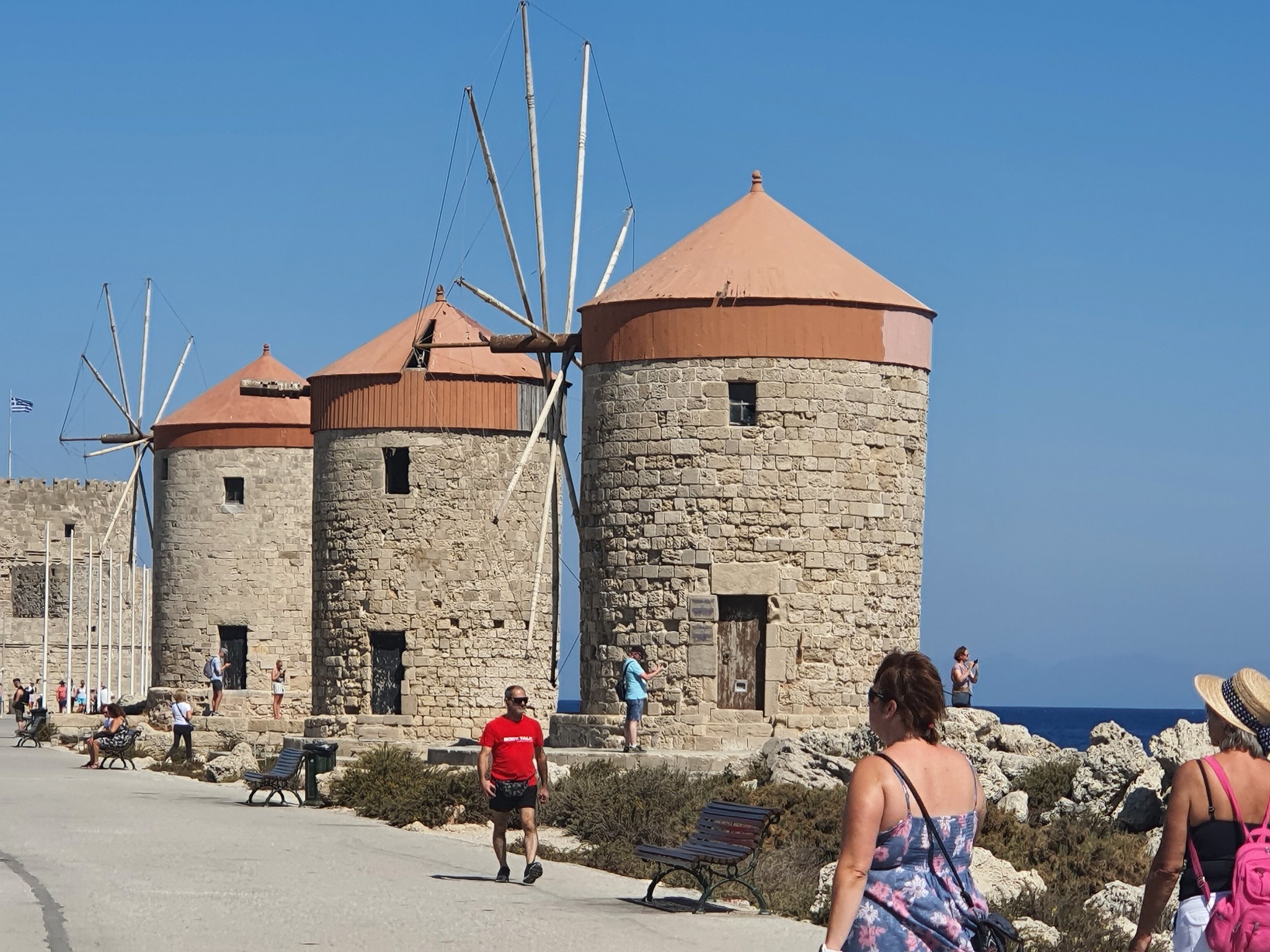
Windmills Rhodes Harbour 28-9-21
Rodos Park is within easy (downhill) walking distance of Rhodes town. I might take a slightly different view of the return journey. Rhodes is situated close to Turkey and has been controlled by many different empires through the ages. Roman obviously, the Byzantine or Eastern Roman empire based on Constantinople, Islamic forces carried off the remains of the Colossus, then the Genoese and in the Crusader period the Knights Hospitallers who are responsible for much of the monuments which we visit today. The scale of the fortifications is enormous.
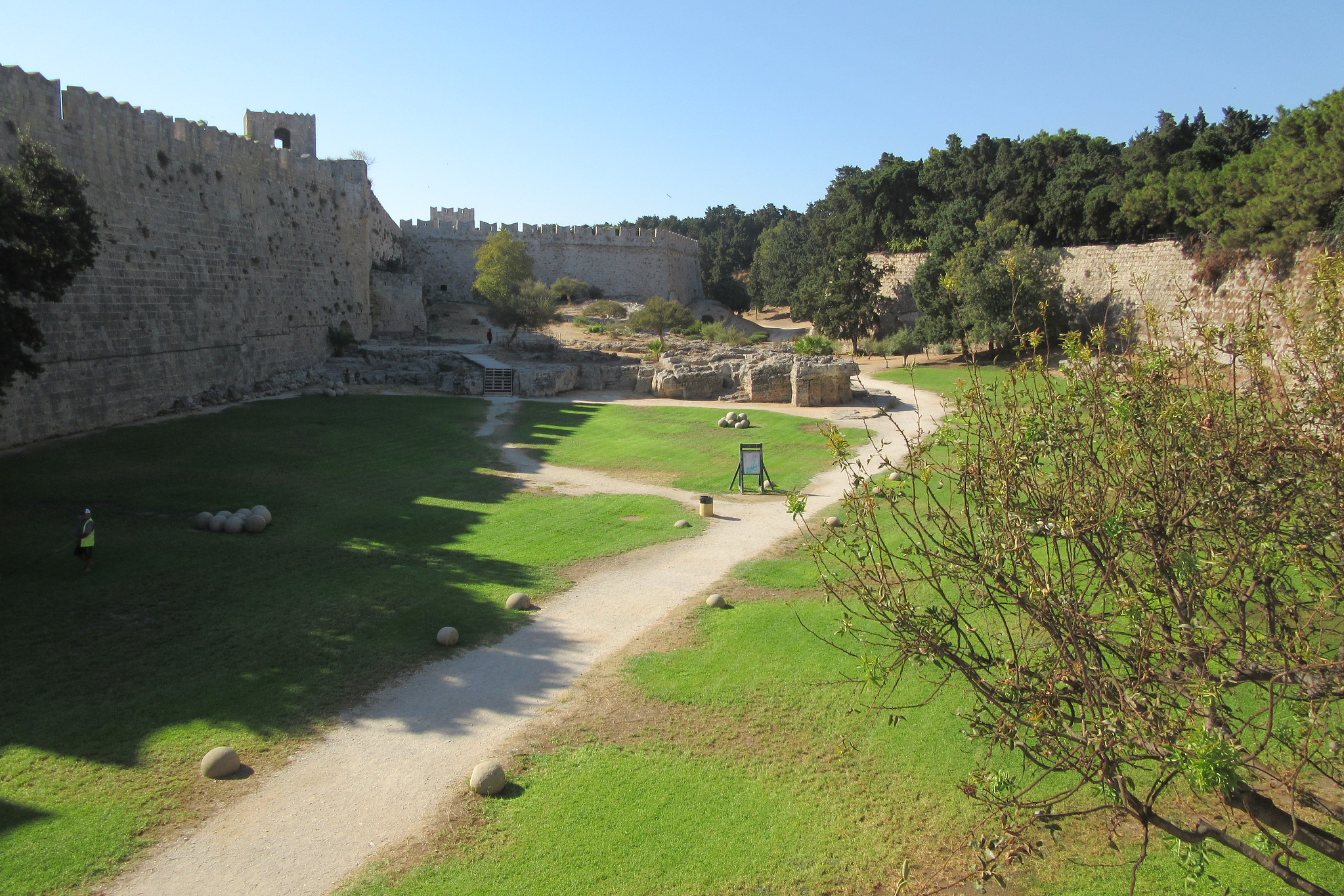
Fortifications Rhodes 28-9-21
Later the island fell into the Ottoman Empire for around 400 years then the Italians took control in 1912 with an agreement that it would be passed back to Turkey never being completed due to the First World War. German occupation commenced in 1943 after Italy was defeated which ended in 1945 and the island became part of Greece in 1947 with the Italian colonists returning to Italy. A hugely mixed history and the town is relatively flat as we wander around some of the back streets.
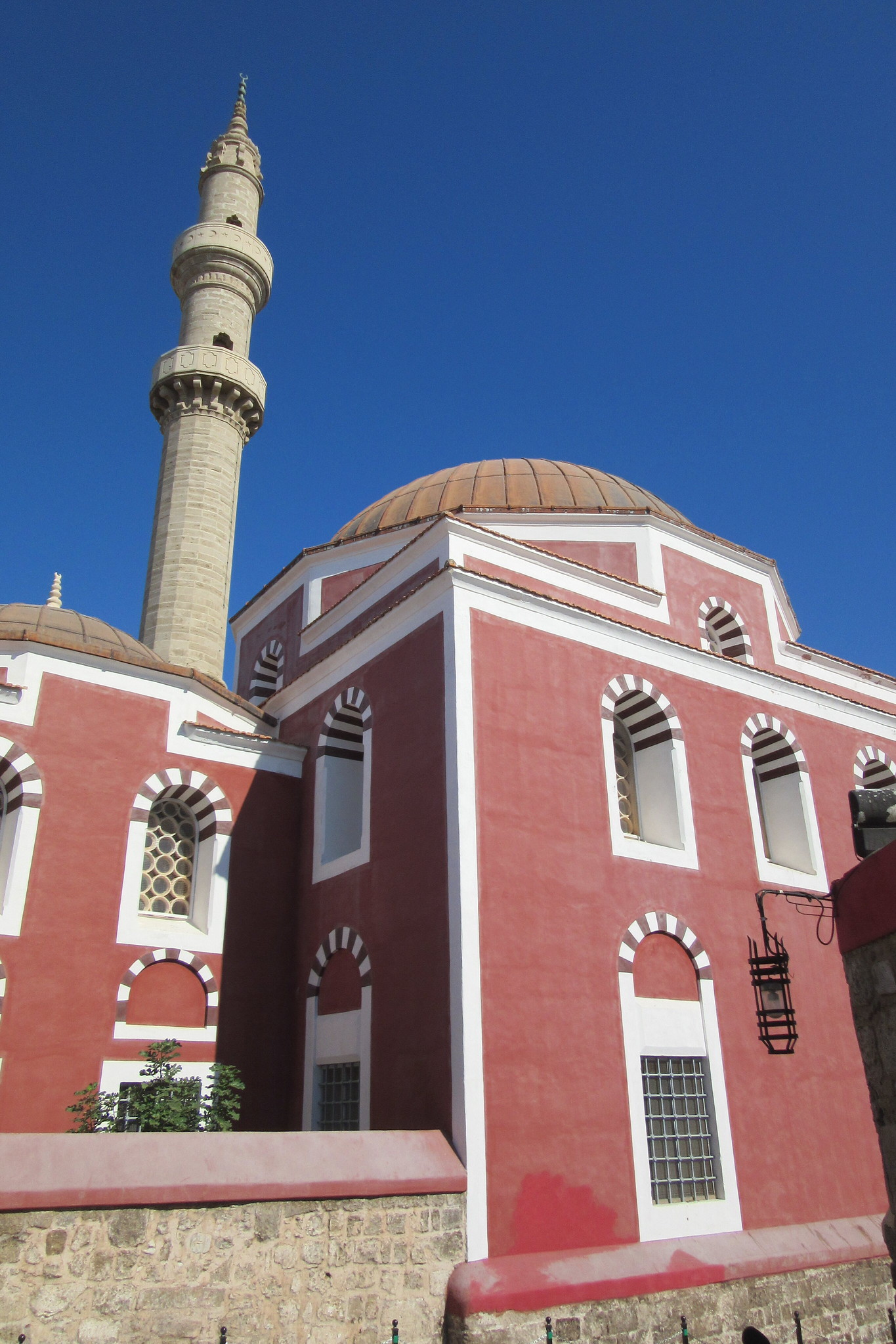
Suleymaniye Mosque 28-9-21
We see evidence of the various eras – the Knights Hospitallers for the fortification and the mosque originally built in early 16th Century once the Ottoman Empire had taken control of the island, but I think a large proportion of was reconstructed in 1808 and has been closed since 2014 awaiting further restoration.
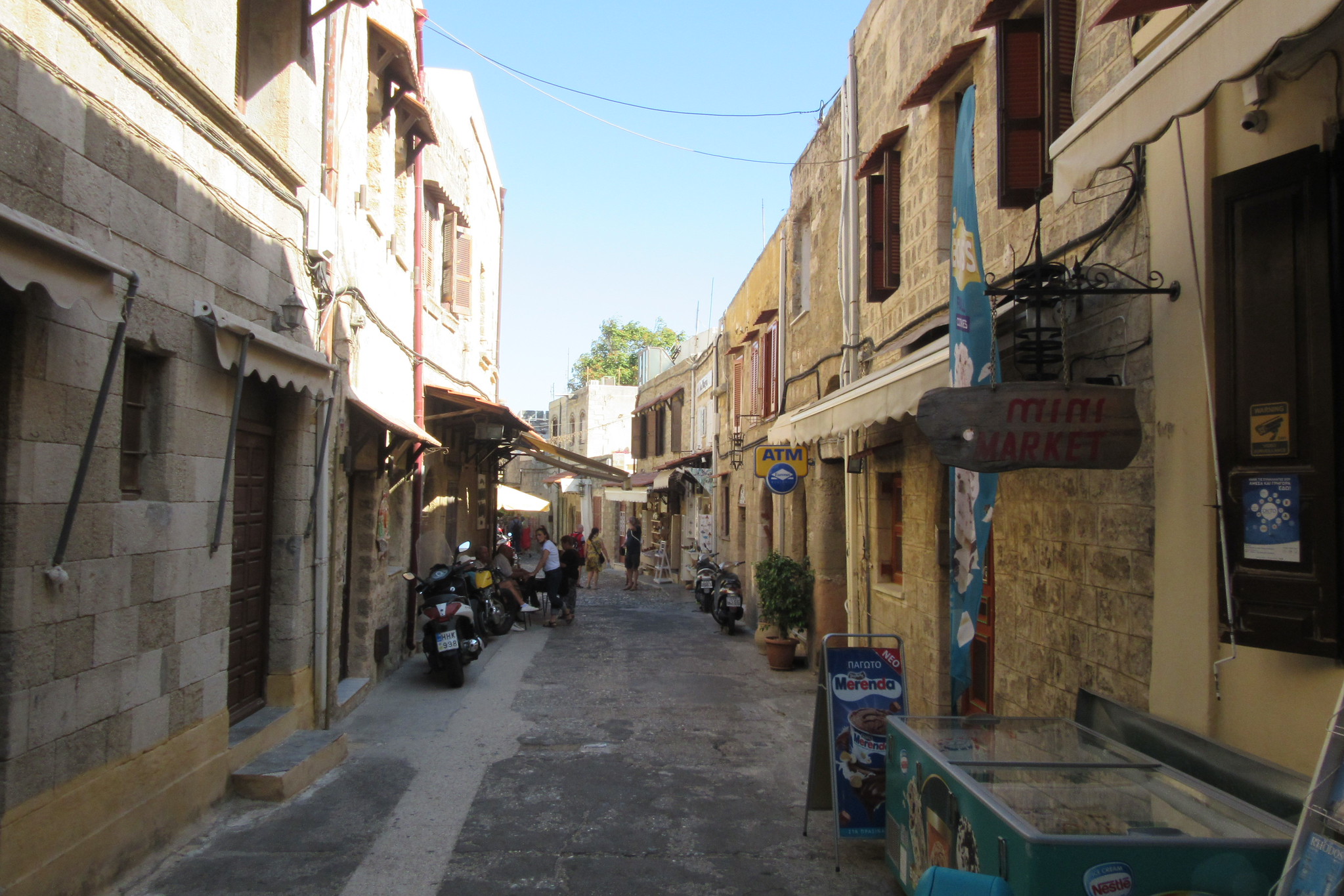
Rhodes Town 28-9-21
A side street in Rhodes Town – I was lucky here as usually there were more people around!
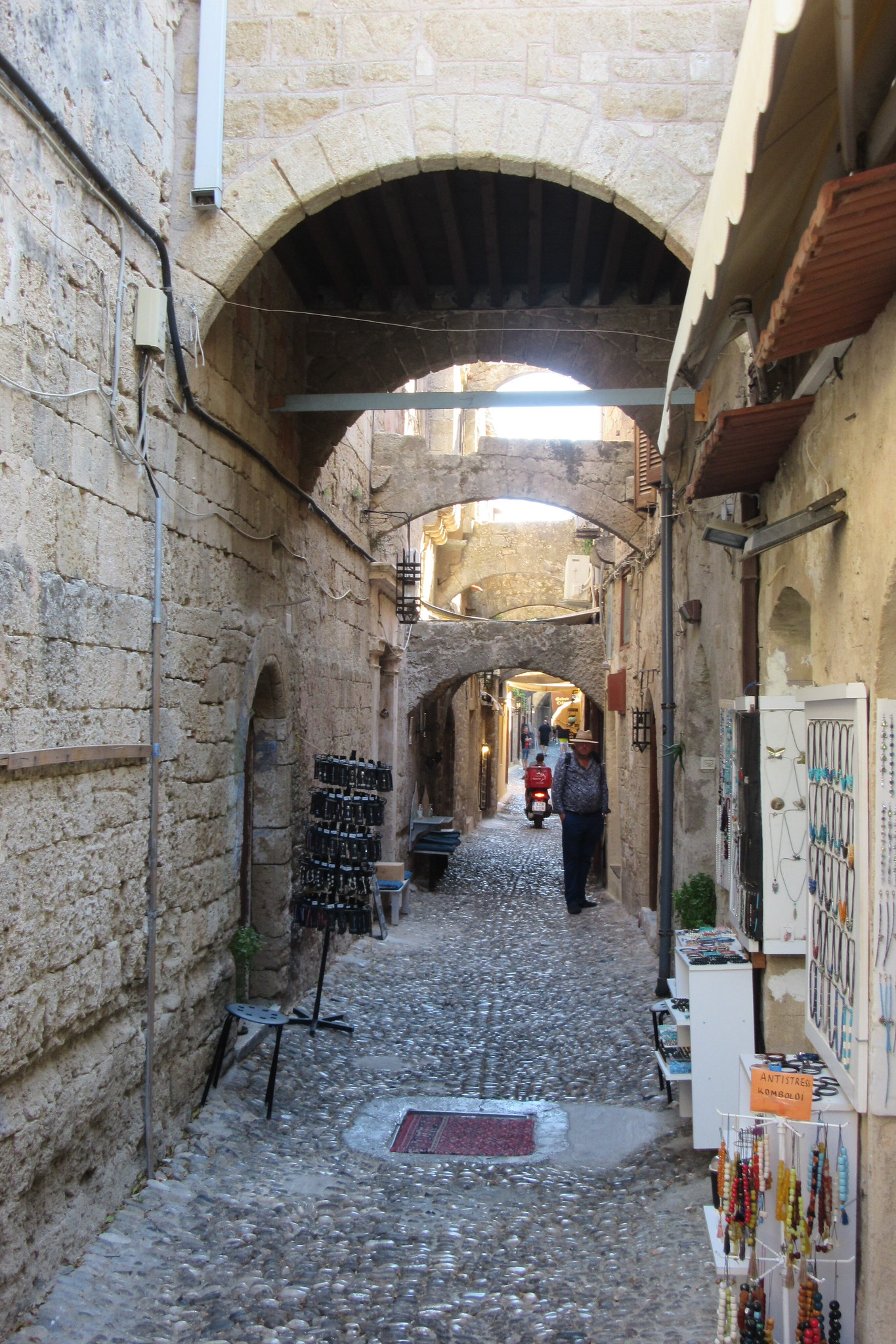
Different levels Rhodes Town 28-9-21
What was obvious but which we did not investigate is that there appear to be higher levels with connecting bridges between buildings common around the town.
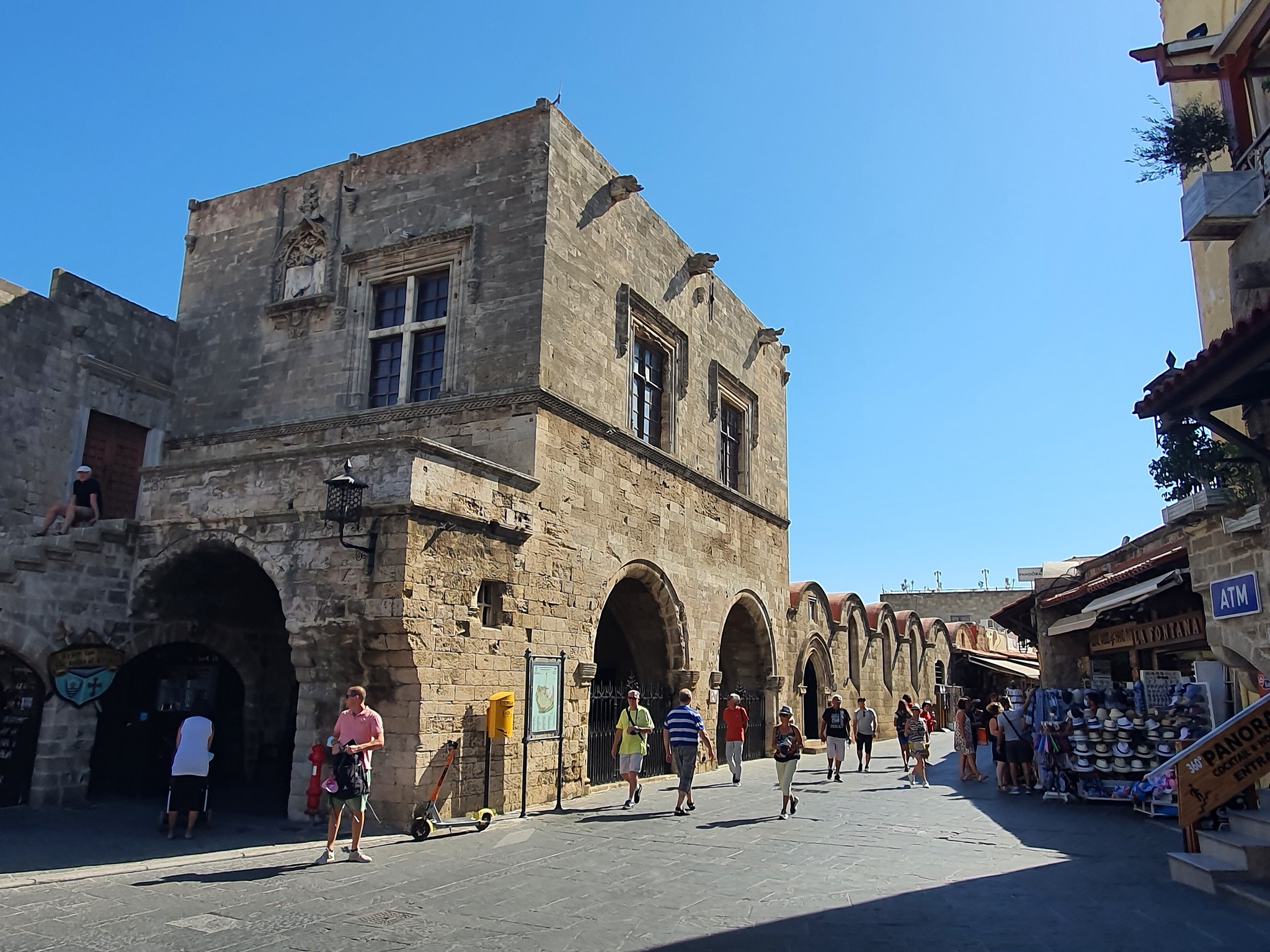
View opposite coffee break Rhodes 28-9-21
After all that walking we decided a break for coffee and people watching was in order as they wandered along the Street of the Knights (Odos Ippoton). We ended our visit to Rhodes Town with a rapid visit to the iconic Windmills of Mandraki as seen above. They were used to grind grain being offloaded from the ships in the harbour. There were once 12 – 18 mills along the harbour front.