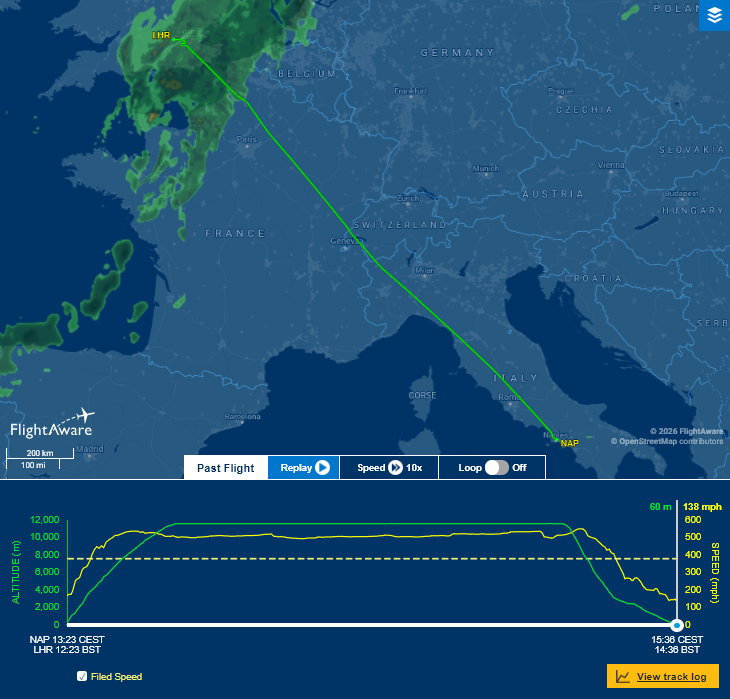
BA525
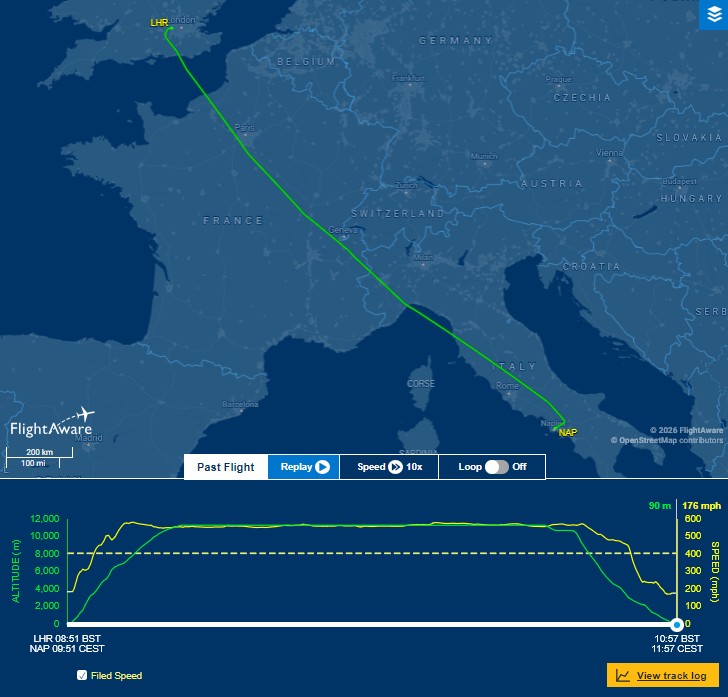
Our transfer to Naples airport takes some time due to the very heavy traffic, probably the worst we have experienced. Check in has not opened so we are in plenty of time. Seating at the gate is very limited and most people are standing for a good half hour. It is a simple walk across the ground to the plane and up the rear steps to board the plane. Boarding is pretty rapid with the luggage taking longer. We push back soon after 1300 with take off about 1320. We make good time and land 14 minutes early.
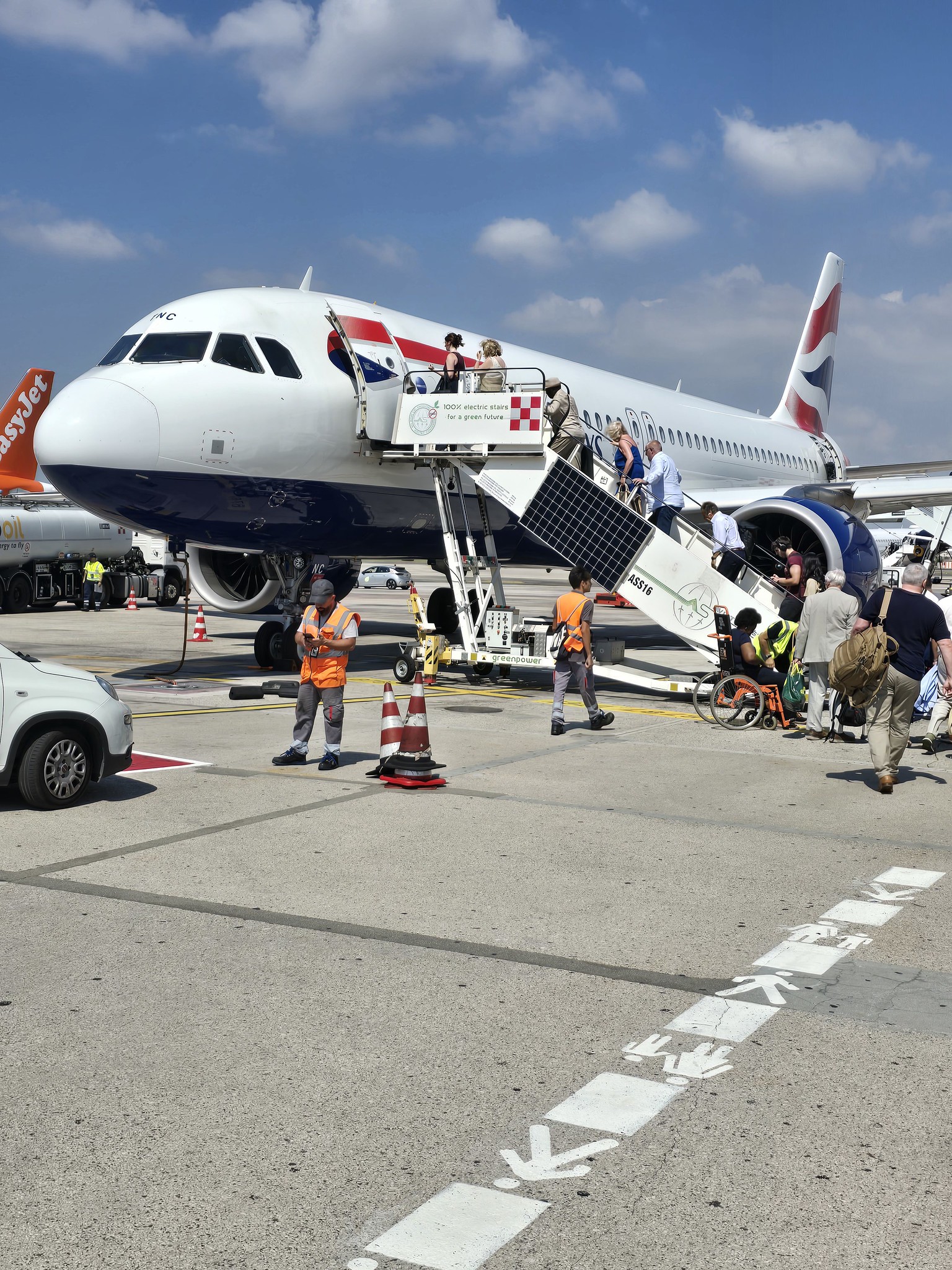
G-TTNC Naples 8.9.26
As the pilot admitted he was surprised by the number of planes on the ground at Heathrow – it seems that NATS crashed earlier today and no flights are leaving Heathrow, Gatwick and we think we were the last plane to land at Heathrow.
This started three hours of complete uncertainty – and the news systems were not even aware that nothing was flying. After some time the plane is directed to a stand somewhere near T4. This was achieved before we became 3 hours late enabling BA to skip delay payments as we were not 3 hours late. Even though we are at a gate we cannot deplane – there are no steps or buses. Then there are steps but no buses. Then there are no steps or buses. Then about 3.5 hours after landing we have steps and buses and a man who can actually make the steps work. We leave the plane and the bus wends its way to T5 (no tour guide) where we manage to gain entry to the UK. The baggage hall is in complete uproar. All luggage deliveries are suspended and it is clear that our luggage is not coming home with us today.
Filling in the claim form at the limited number of terminals is a nightmare, asking for information which could easily be populated from our boarding records which are also linked to our luggage tags. Absolutely awful. What they do not tell you is that the only way to access the system at a later time is using your surname, so if you mistype it you can not check on progress reclaiming your luggage. How do I know this? The hard way. I do not recommend it.

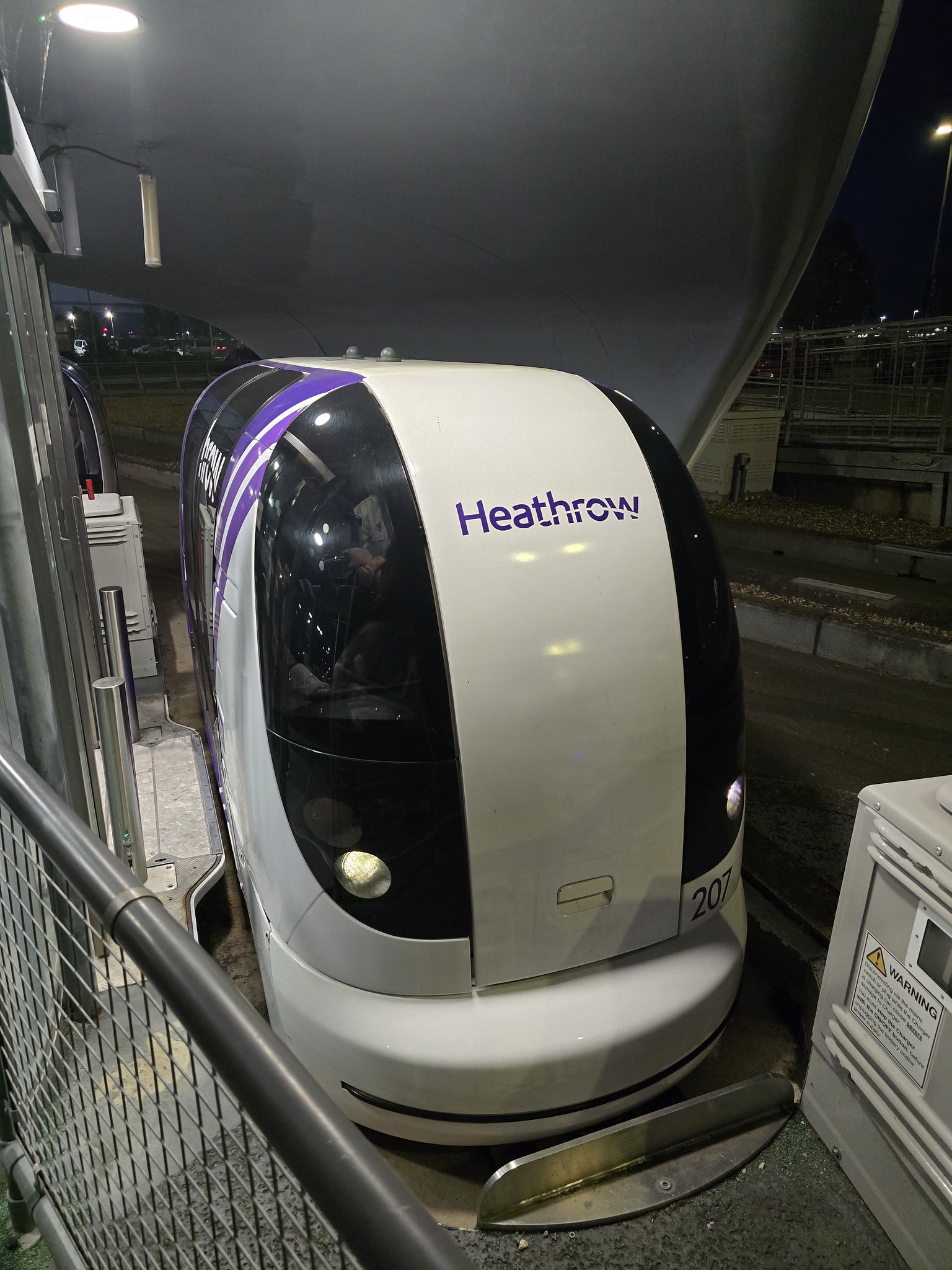
T5 Pod parking 8.9.26
Jackie’s suitcase returns several days later and the courier has my bag on the same manifest and yet denies he has the bag. Nor is it visible in the van. He seems unable to grasp that if it is on his list he should have it. Unbelievable. Having finally spoken to someone (I think in India) I now have access to the online system which for several days tells me it was going to be delivered some days before. Then magically it says it is on its way, then not, then it is. A week after I arrived home so does my case. Relief that nothing has been lost.
For the record the Newmarket description of the day:
It’s “Arrivederci, Italia”, today, as you transfer to the airport to check in for your flight home at the end of a marvellous holiday to the Bay of Naples.